


A political scientist trained in Switzerland and the United States, Laetitia Bochud led the communication and marketing department of a luxury brand for the Swiss market, among other project management activities. In 2017, she joined the stimulating scene of immersive technologies with Virtual Switzerland. This association, initially supported as a National Thematic Network (2017-2020) by the Swiss Innovation Agency Innosuisse, fosters and promotes the development, integration, and technological transfer of Swiss XR according to 3 axes: 1) production and creation, 2) industry and integration, 3) innovation and research. Besides managing projects and facilitating productions and initiatives, Laetitia is also a university CAS lecturer, jury member, curator, and public speaker. Elected Digital Shaper 2022, Laetitia chairs the board of XR4Europe, an association that supports and federates European XR professionals, and that is involved in Horizon Europe projects. She is also and ambassador for Women in immersive Tech in Switzerland, and the global lead for the IMPULSE Programme – the European XR Accelerator, one of the initiatives she helped co-create.
-
Gabriel VINCENT
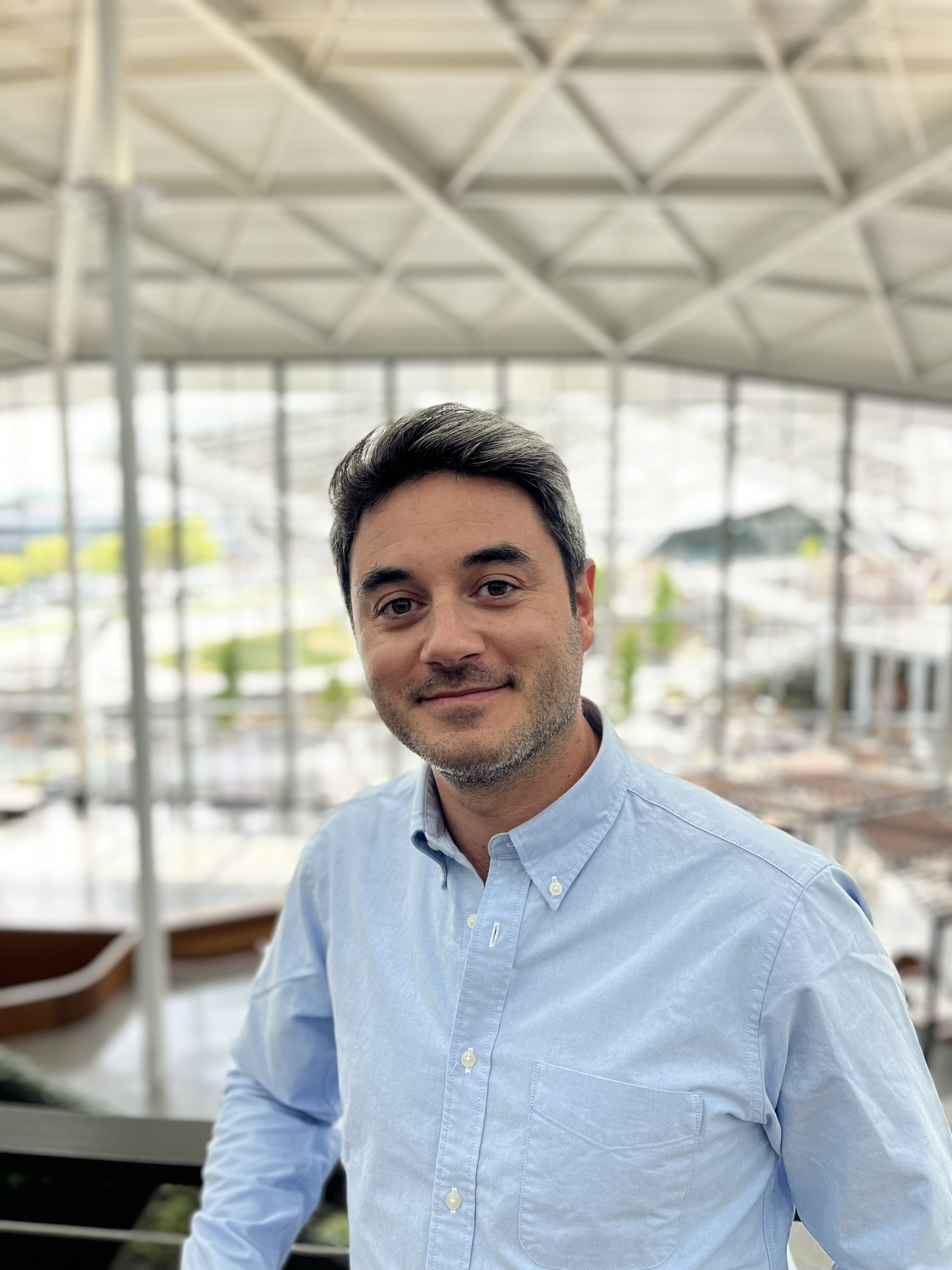
Gabriel Vincent, Omniverse and digital twins sales specialist Segment specialist at NVIDIA. It helps companies in southern Europe with their GPU virtualization, convergent 3D pipeline, digital twin and industrial metaverse projects. With over 10 years’ experience in the IT industry, he helps companies of all types to leverage digital transformation and professional visualization technologies to increase innovation and competitiveness.
-
Anne BAJART

Anne Bajart is Deputy Head of Unit for Interactive Technologies, Digital for Culture and Education at DG CONNECT. She previously was Head of Sector for Robotics and Artificial Intelligence in DG CONNECT. She has a PhD in electrical engineering and worked as researcher, lecturer and project manager.
-
Miriam REINER

Miriam Reiner studies neuroscience applied to advanced human-centered technology (VR/AR). She has published over 150 research articles, two books, been a keynote speaker at numerous academic and industry conferences, and filed numerous patents. She has been a part-time visiting professor every year at Stanford, as well as at Nanyang Technological University, UNC, University-College London and many others. Miriam works with leading international companies in the field of human-machine interfaces and participates as an expert on key EU committees on future innovative technologies. She founded and directed the VR/AR and Neurocognition Laboratory at Technion, mainly thanks to EU grants, and has trained some 40 PhD and MSc students. His work lies at the interface between neuroscience and model-based machine learning, and aims to develop new technologies for human enhancement. Key results include VR/AR methods to accelerate memory consolidation, improve spatial intelligence, speed up problem solving, and error potential-based brain-computer interfaces to restructure neural patterns for faster rehabilitation. Her current focus is on extracting neural biomarkers from eye dynamics in VR/AR for improved synergy between eyes and brain machine (VR/AR).
Some of her patents have been commercialized and, in 2017, she co-founded a company, BrainVu, based on her research. BrainVu was acquired by Mantis Vision in the third quarter of 2018, and it and its team acted as a stand-alone group until autumn 2020. In 2021, she founded NeuCogs, which focuses on human-machine cooperation and the integration of human brain responses with AI, to generate a type of hybrid intelligence that could be applied to improve collaboration between humans and machines.
-
Marc PIUZZI

After a multi-disciplinary research career leading him to work on experimental approaches and to develop new tools taking advantage of new technologies (virtual reality and haptic feedback in particular), Marc specialized in the design of virtual and augmented reality systems for professional applications in the broadest sense. He has participated in the development of two immersive headset projects, including the Lynx R1, which is now available.